

The Standards Behind Interoperable Transceivers and Cables
Nearly every pluggable transceiver, DAC, ACC, and AEC that ships into a data center today is built to a document most buyers never read: a Multi-Source Agreement. MSAs are the reason a QSFP28 module from one vendor plugs into a switch built by another and the reason a 25-year-old SFP form factor is still the physical basis for optics shipping in 2026. Understanding what an MSA actually is, and which ones govern which form factors, is the difference between assuming interoperability and being able to verify it.
What Is an MSA, and Why Does It Matter?
A Multi-Source Agreement (MSA) is a specification developed by an industry consortium rather than a formal standard issued by an organization such as IEEE or ITU. It is created and maintained by transceiver, connector, and equipment manufacturers that agree on common mechanical dimensions, electrical interfaces, and two-wire management interfaces. This allows products from different manufacturers to be physically and electrically interchangeable.
Since MSAs are voluntary industry agreements rather than regulatory requirements, a product described as “MSA-compliant” must be designed and tested according to the specific revision of the relevant specification. MSA documentation generally covers two areas. Form factor specifications define mechanical dimensions, connector pinouts, and electrical signaling. Management specifications define the memory map and the two-wire protocol used by the host to identify, monitor, and configure the module. A product family such as SFP+ is typically covered by several related documents addressing both areas.
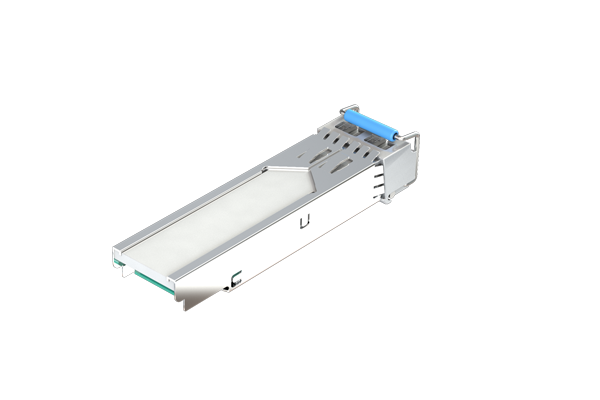
SFP and SFP+: The Original MSA Family
he SFP form factor, and its 10 Gb/s successor SFP+, remain the highest-volume pluggable interface in networking. The core documents
| MSA Reference | Type | Title |
|---|---|---|
| INF-8074i | Form factor | SFP (Small Formfactor Pluggable) Transceiver |
| SFF-8432 | Mechanical | SFP+ Module and Cage |
| SFF-8418 | Electrical | SFP+ 10 Gb/s Electrical Interface |
| SFF-8419 | Electrical / Low Speed | SFP+ Power and Low Speed Interface |
| SFF-8431 | Legacy Electrical | SFP+ 10 Gb/s and Low Speed Electrical Interface (superseded by SFF-8418 and SFF-8419) |
| SFF-8472 | Management | Diagnostic Monitoring Interface for Optical Transceivers (DDM/DOM) |
| SFF-8079 | Management | SFP Rate and Application Selection |
| SFF-8089 | Management | SFP Rate and Application Codes |
| SFF-8690 | Management | Tunable SFP+ Memory Map for ITU Frequencies |
| SFF-8024 | Reference Codes | SFF Module Management Reference Code Tables |
INF-8074i set the original SFP mechanical and electrical baseline; SFF-8431 extended it to SFP+ speeds. SFF-8472 is the specification that actually gives every SFP/SFP+ module its digital diagnostics — temperature, voltage, bias current, and optical power — readable over the same two-wire bus used for identification (ProLabs). SFF-8079 and SFF-8089 work together to define how a module signals and codes multiple supported line rates. SFF-8024 defines the identifier byte that tells a host what kind of module it is looking at in the first place (SNIA).
XFP and X2: The 10G Predecessors
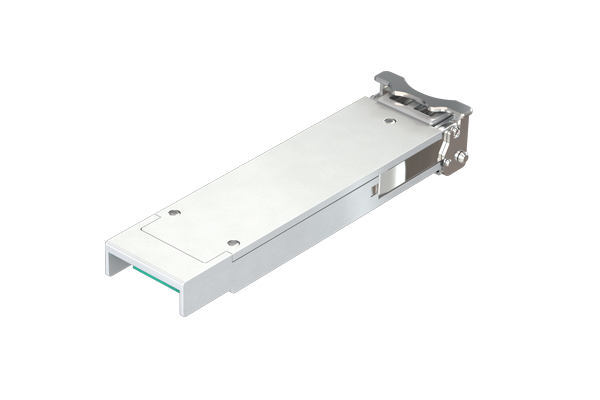
Before SFP+ became dominant, two competing 10 Gb/s form factors briefly coexisted.
| MSA Reference | Type | Title |
|---|---|---|
| INF-8077i | Form factor & Management | 10 Gigabit Small Form Factor Pluggable Module (XFP) |
| SFF-8477 | Management | Tunable XFP for ITU Frequency Grid Applications |
| X2 MSA | Form factor & Management | X2 Transceiver Module |
XFP briefly served as a self-contained 10G module with its own clock and data recovery on board, and X2 targeted board-mounted applications; both were largely displaced once SFP+ matured, but the documents remain the reference for legacy XFP and X2 equipment still in service.
CFP, CFP2, CFP4, and CFP8: High-Density Coherent and Client Optics
The CFP family scaled pluggable optics up toward 100G, 400G, and coherent DWDM applications, shrinking in physical size across each generation while a single management specification carried forward:
| MSA Reference | Type | Title |
|---|---|---|
| CFP MSA Rev 1.4 | Form Factor | CFP MSA Hardware Description |
| CFP MSA Rev 1.0 | Form Factor | CFP2 Hardware Specification |
| CFP MSA Rev 1.1 | Form Factor | CFP4 Hardware Specification |
| CFP MSA Rev 1.0 | Form Factor | CFP8 Hardware Specification |
| CFP MSA Rev 2.6 | Management | Management Interface Specification |
CFP2 and CFP4 became the working form factors for 100G coherent line cards and 100G/400G client optics respectively, while CFP8 targeted 400G client applications at higher density than CFP4 (ProLabs).
QSFP+, QSFP28, and QSFP-DD
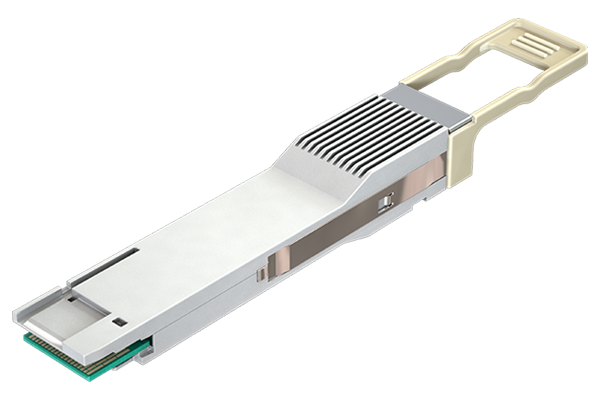
This family carries the bulk of today's 40G–100G DAC, ACC, AOC, and transceiver volume, with SFF-8636 governing the identification and diagnostics for QSFP+ and QSFP28 modules over the same two-wire interface. Above 100G per lane, the QSFP-DD MSA extended the same double-density footprint to 200G and 400G, later to QSFP-DD800 and QSFP112, and adopted the Common Management Interface Specification (CMIS) as its management interface, now maintained by the Optical Internetworking Forum, as a shared management model spanning QSFP-DD, OSFP, and QSFP112 (Lightwave; OIF).
| MSA Reference | Type | Title |
|---|---|---|
| SFF-8436 | Form Factor & Management | SFF-8436 — QSFP+ 4X 10 Gb/s Pluggable Transceiver |
| SFF-8665 | Form Factor | QSFP28 4x Pluggable Transceiver Solution |
| SFF-8636 | Management | Management Interface |
OSFP: The High-Density Frontier
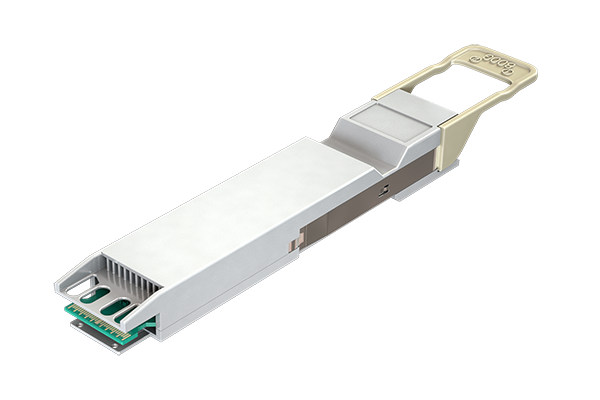
The Octal Small Form Factor Pluggable (OSFP) is governed by its own MSA, chaired by representatives from Arista, Cisco, and Amphenol, and specifies eight- or sixteen-lane modules supporting aggregate interface speeds of 400 Gbps and above, including OSFP-XD for even higher lane counts (OSFP MSA). Because OSFP was developed alongside QSFP-DD, it shares CMIS as its management interface, so a host driver stack built against CMIS can, with the right adaptation, manage OSFP, QSFP-DD, and QSFP112 modules through a common register model (L-P Resources).
Conclusion
MSA compliance is what lets a buyer treat "SFP+," "CFP4," or "OSFP" as a category rather than a single vendor's product and it is the same discipline that lets Lumulus DAC, ACC, AEC, and AOC assemblies interoperate with switches and routers from any vendor, from a legacy SFP+ port to an OSFP-based 800G platform. As lane rates climb past 100G, the specifications that matter most are shifting from the original SFF-committee documents toward CMIS-based management under the QSFP-DD and OSFP MSAs, the layer every buyer should check first when evaluating a module or cable's real interoperability, not just its physical fit into a cage.